


The B & B Palazzo Solimena is an elegant structure located on the first floor of the homonymous Palace.
From the eighteenth-century courtyard, through an independent entrance, you access an ancient marble staircase, with a beautiful wrought iron railing.
Recently renovated, preserving the typical features of the eighteenth-century Neapolitan houses and putting all technological systems in safety, it is furnished with antique furniture, and in style, only the beds are modern. The rooms are decorated in soft colors, with exposed ceilings with chestnut beams from the 1700s.
The structure is equipped with an automatic emergency lighting system. Entrance and common areas are video surveillance.
The reception area is a cozy living room, with a desk and a nineteenth-century table, a well-stocked bookcase and a piano. A well-stocked library is available to guests, with a vast assortment of books of all literary genres and Neapolitan culture.
From here you can access a loft area with an area reserved for a breakfast.
There is a small terrace inside the courtyard of the historic Palazzo.
First aid kit is available.
Francesco Solimena
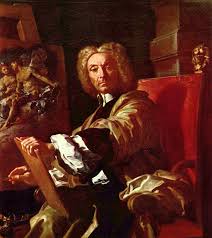
Francesco Solimena (Serino 1657, Naples 1747) can be considered one of the most significant artists of late Italian Baroque art.
His father, Angelo Solimena, a naturalist painter, trained him in his workshop and collaborated with him on the frescoes of his youth.
The meeting with Luca Giordano and Mattia Preti gave him the decisive impulse, leading him to express himself within the canons of Roman Baroque and Neapolitan pictorial tradition.
However, he was always able to infuse originality and character to the works commissioned to him. In particular, the choreographic scenes and the very elaborate architectural constructions were one of its distinguishing features, as testified by the frescoes in the churches of San Paolo and San Domenico Maggiore in Naples.
All Neapolitan cultural environments felt the influence of Solimena, who was also a poet, sculptor, precursor of the nativity scene, architect.
All Naples preserves masterpieces of Solimena: the church of Sant'Anna dei Lombardi, the Santa Maria della Pace hospital, the church of Gesù Nuovo (the wall at the entrance of the Gesù New), the Chapel of San Filippo Neri in the church of the Girolamini.
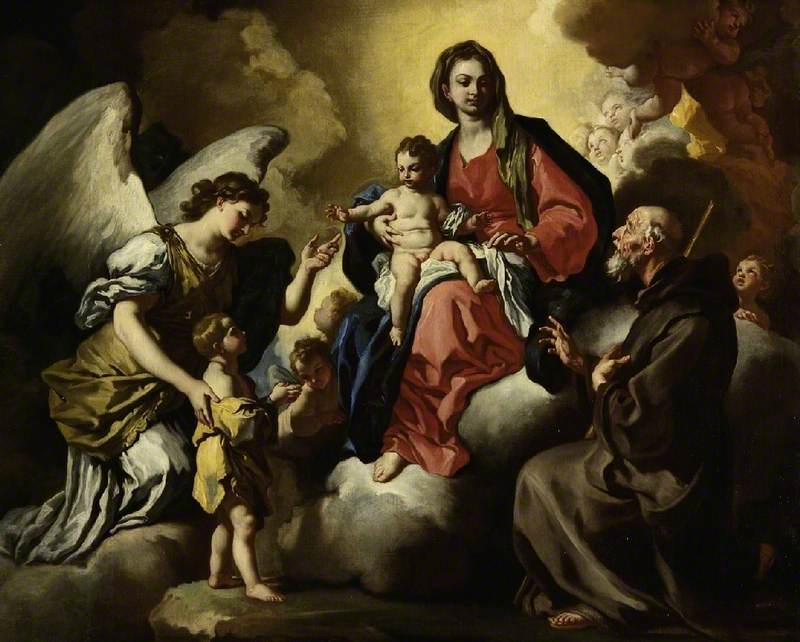
But nothing perhaps bears witness to Solimena's attachment to her city, like the painting of the most illustrious citizen, the San Gennaro blessing dated 1702 currently exhibited in the galleries of the Treasury museum of San Gennaro.
Palazzo Solimena
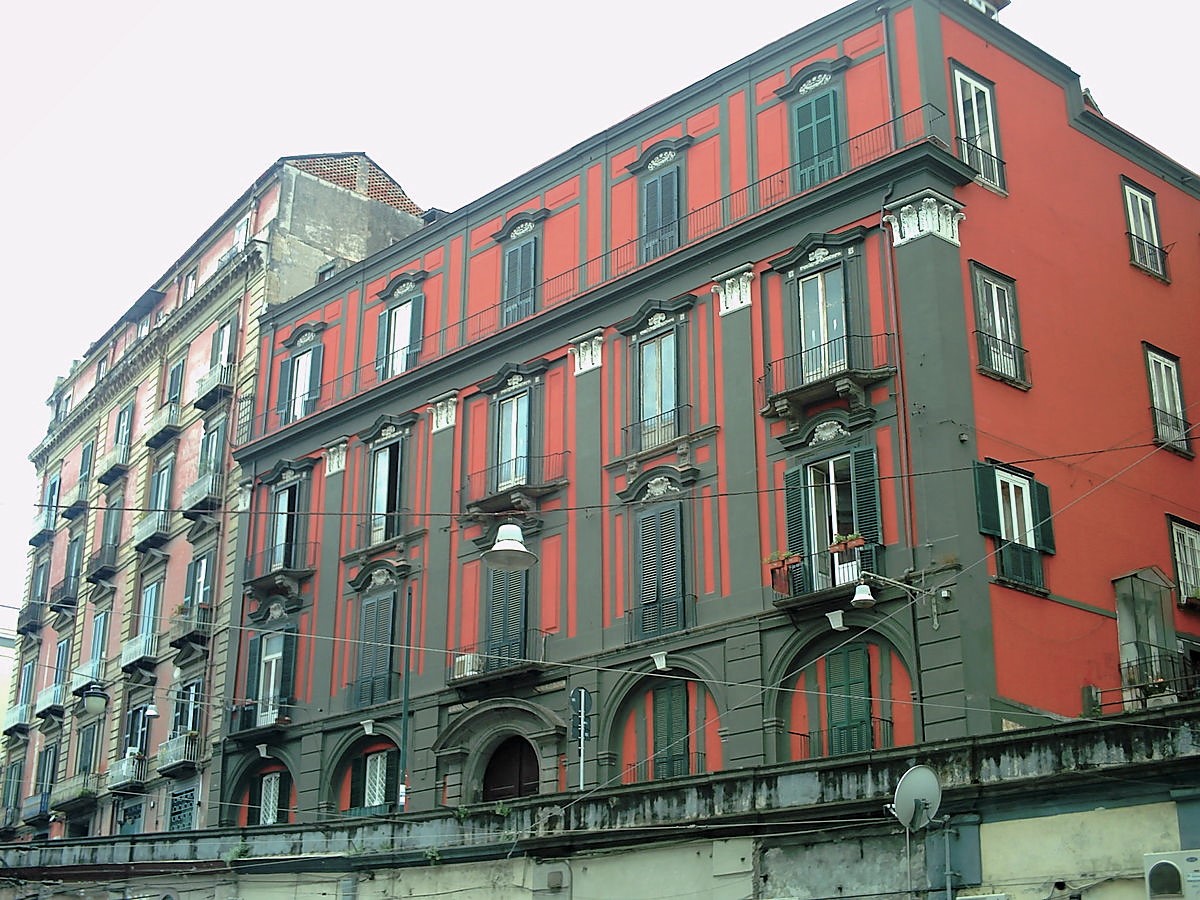
The palace of Francesco Solimena is a product of Neapolitan excellence, built by the genius of Francesco Solimena, and not excluding the extraordinary participation of Ferdinando Sanfelice, Giovan Battista Nauclerio and Domenico Antonio Vaccaro .
It stands on the hill of San Potito, one of the areas of Naples between the village of Avvocata and Sant'Andrea delle Dame, and is very visible from the square of the Archaeological Museum together with the palace I quote Melissano on his left and the church of San Giuseppe dei Nudi.
The building was first destroyed during the riots of the Four Days of Naples in 1799, a second time during the bombings of 1943, and a third and last time with the earthquake of 1980.
The building in question, the most beautiful of the whole district, was modified in the original appearance consisting of a main building: a palatial house and various other real estate elements installed all around in the surrounding environment according to the building rules relating to the periods of the local courts, merged and built at different times until the entire second half of the seventeenth century. The building always maintained an independent life with respect to the original nucleus, which, at the beginning of the eighteenth century, will be definitively modified according to the current scheme set by the abbot Ciccio, the alias entrusted to the person of Francesco Solimena.
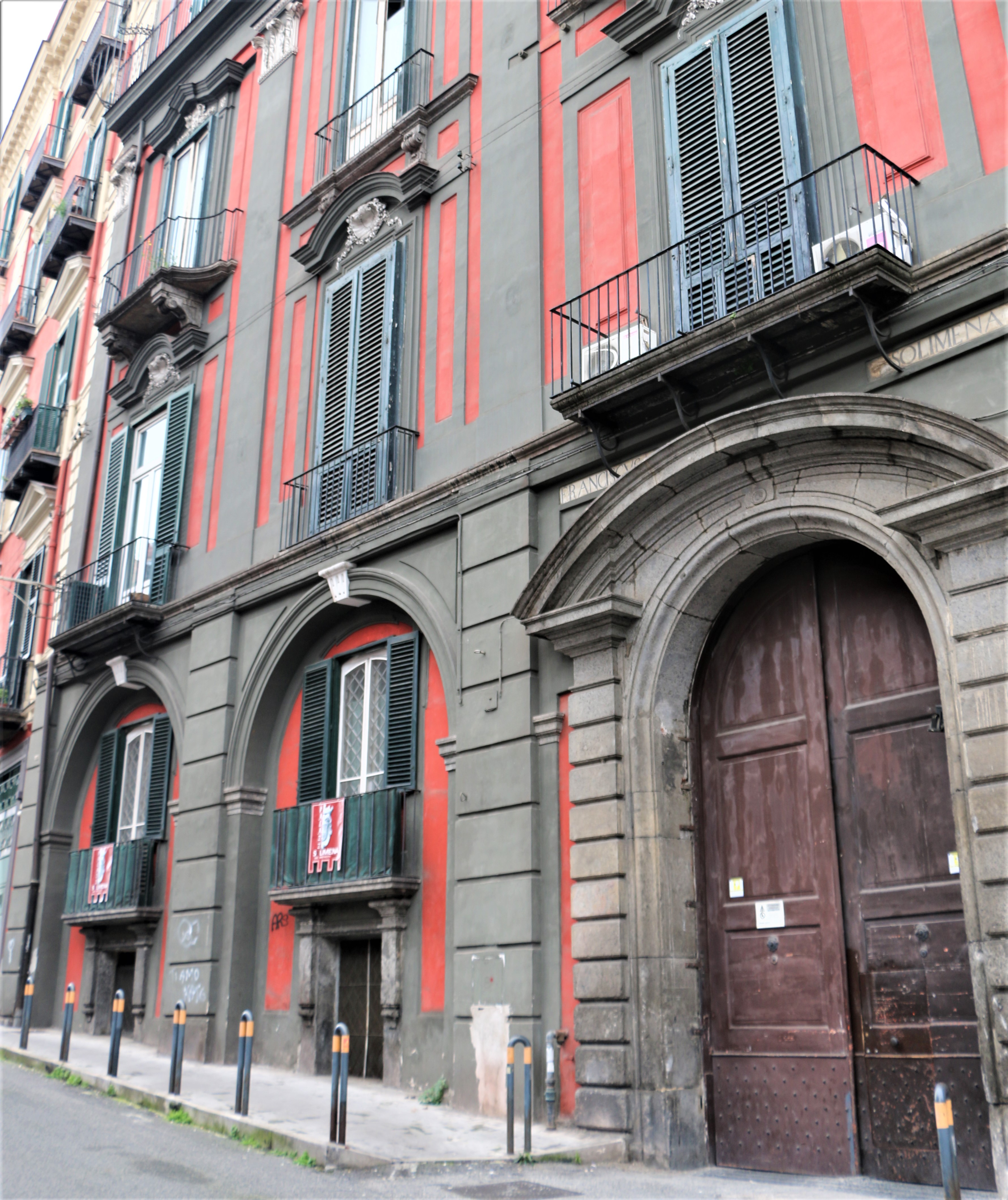 The abbot Solimena the palace will buy it in 1710.
Although marginal with respect to the pictorial production, Francesco Solimena, however, distinguished himself for notable architectural abilities demonstrated in the façade of the church of San Giuseppe dei Vecchi, still in San Potito, the portal of the church of San Nicola alla Carità in via Toledo near piazza Carità, and the dome of the church of Santa Maria della Sanità in the populous district of Barra.
The building presents the facade divided by a giant order of Corinthian pilasters. Clearly inspired by the art of Michelangelo, all resting on a massive rough stone base from Vesuvius.
Strictly simple and formal, it is clearly seen to be a narrow Neapolitan re-elaboration of an example of Roman base, with arched portal, broken tympanum supported by studded pilasters in a single profile low.
As far as the remaining spatial organization of the building is concerned, it is bolted around the "entrance-garden-uncovered garden" axis. On the back wall of the building three entrances to the stables were embellished with piperno frames with imaginative motifs, of which the central one, the largest and perhaps even the most successful in terms of yield, presents a massive exhibit with stone flanked by reggiredini limestone, heraldic shields and drinking water still in piperno (work made in 1718 by Tommaso Cortese and Nicola Pagano).
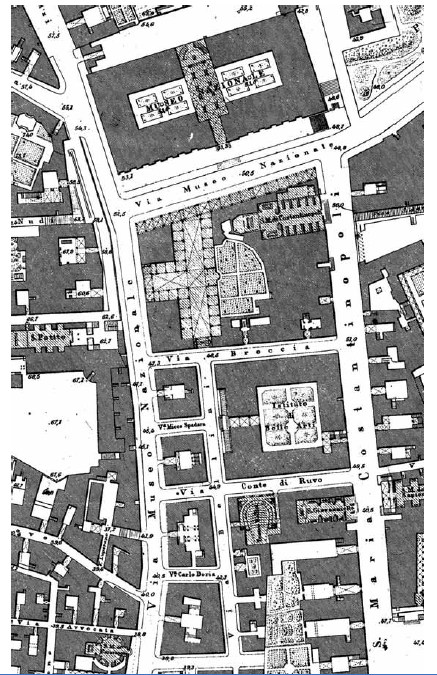
The access ramp to the building, the current via Salvatore Tommasi, this ramp must be sought in the urban plan desired for Naples by Ferdinando II di Borbone, in the second half of the nineteenth century .
The new "museum district" was part of this urban plan which was to develop around two important public buildings: the Palalzzo degli studi (now the Archaeological Museum of Naples) and the Fosse del Grano (near today's Via Pessina) and for which a new road structure was planned.
In fact, of the residential buildings, the new road was created that served to connect Via Toledo with the Archaeological Museum and from there, crossing Santa Teresa degli Scalzi and the Amedeo di Savoia Course, he arrived in Capodimonte.